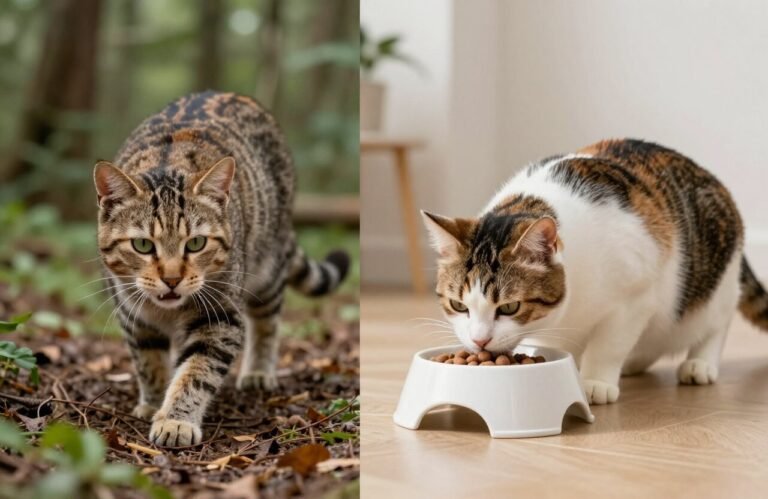

If you’ve ever switched your cat’s food only to have them walk away unimpressed, you’re not alone. Cats resist dietary changes for real biological reasons — including natural neophobia (fear of new things), imprinting on early food textures, carbohydrate addiction from processed foods, and learned comfort associations with familiar meals. Understanding this makes the process far less frustrating.
Before You Start
A vet check is strongly recommended, especially for cats over 7 or those with health conditions. Choose a stable, low-stress period to begin, and if your cat currently free-feeds, switch to scheduled meals first. This creates healthy hunger motivation and lets you monitor intake accurately.
Gather your supplies: new food (try 2–3 small options), a kitchen scale, a notebook, and palatability enhancers like bone broth or freeze-dried toppers.
The Gradual Transition Method

The gold standard is a slow, steady mix-in approach over 7–14 days:
- Days 1–2: 75% old / 25% new
- Days 3–5: 50% / 50%
- Days 6–8: 25% old / 75% new
- Days 9–10: 100% new food
Sensitive cats may need 3–4 weeks; extremely resistant cats can take up to 3 months. Go at your cat’s pace — slow transitions succeed far more often than rushed ones.
Texture Tips
Many cats reject new food based on texture, not taste.
- When moving from dry to wet food, try gradually moistening the dry food first, then mixing in wet.
- When moving to raw, start with freeze-dried raw rehydrated to a wet consistency.
Always serve food at or near body temperature (98–102°F) to boost aroma and appeal.
Dealing with Picky Eaters
If your cat is digging in their heels, try these strategies:
- Drizzle bone broth or tuna water over the new food
- Use mild hunger motivation (remove uneaten food after 30 minutes and wait for the next scheduled meal),
- Introduce new food as a “treat meal” before fully transitioning, or
- Engage your cat in play before feeding to stimulate appetite.
Never let your cat go more than 24 hours without eating — this can cause serious liver complications.
Common Problems & Quick Fixes
- Complete refusal: Start with just 5% new food; try a different protein or brand
- Vomiting/diarrhea: Slow down the transition; add plain pumpkin (½ tsp per meal) Selective eating: Blend or mash foods together so separation is impossible
- Weight loss: Slow down and feed more frequent, smaller meals
- “Carb withdrawal” begging: Stay consistent — this typically resolves in 1–3 weeks
What to Expect
Improvements don’t happen overnight, but within 3–8 weeks most cat owners notice shinier coats, firmer and less odorous stools, better energy levels, and healthier weight.
Some cats — particularly those switching off prescription diets or managing conditions like diabetes — show even more dramatic results over several months.
Small Steps, Big Results
Transitioning your cat to a species-appropriate diet is one of the most impactful investments you can make in their long-term health. It takes patience, and setbacks are normal — but with the right approach, the vast majority of cats get there. Small, steady changes add up to a healthier, happier cat — and that’s always worth the effort.