Let’s talk about something that drives pretty much every cat owner a little crazy: getting our cats to actually drink water. If you’ve got a cat with feline leukemia virus, this becomes even more important. Proper hydration helps support their immune system and keeps their kidneys functioning well—both crucial for FeLV-positive cats.
But here’s the thing: cats are naturally terrible at drinking water. It’s not just your cat being difficult (though mine certainly has that down to an art form). Cats evolved from desert-dwelling ancestors, so they’re just not programmed to seek out water the way dogs are. That doesn’t mean we can’t encourage them, though.
Why Hydration Matters for FeLV Cats
Before we dive into the how-to, let me be real with you about why this matters. Cats with FeLV are more susceptible to kidney issues and infections. Staying hydrated helps flush toxins from their system and keeps everything running smoothly. I’m not saying water is a cure-all—it’s not—but it’s one of those simple things that can make a genuine difference in your cat’s quality of life.
Dehydration in cats can lead to serious health complications, especially for those managing chronic conditions like feline leukemia virus. When cats don’t drink enough water, their kidneys work harder, and waste products can build up in their bloodstream.
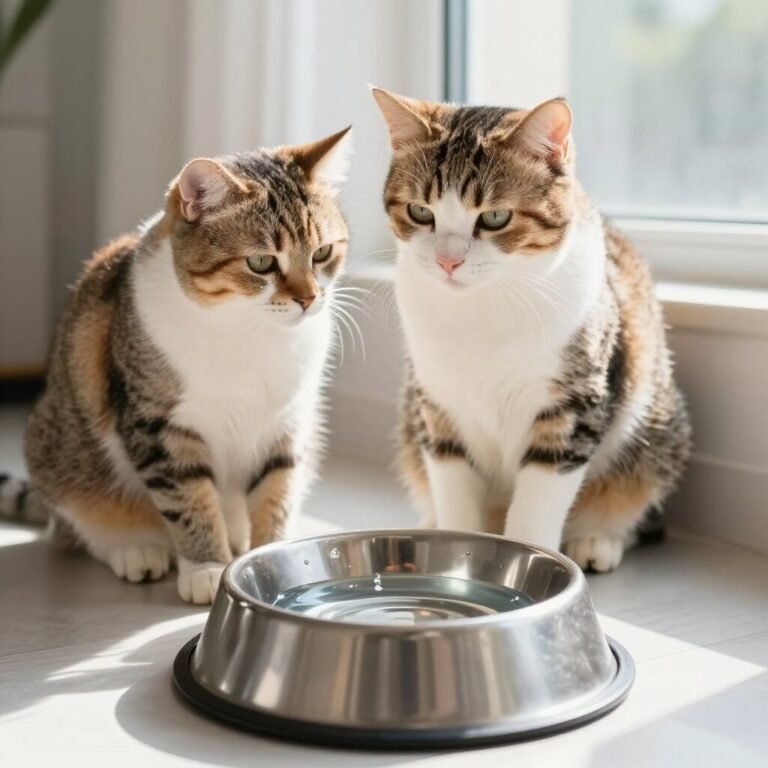
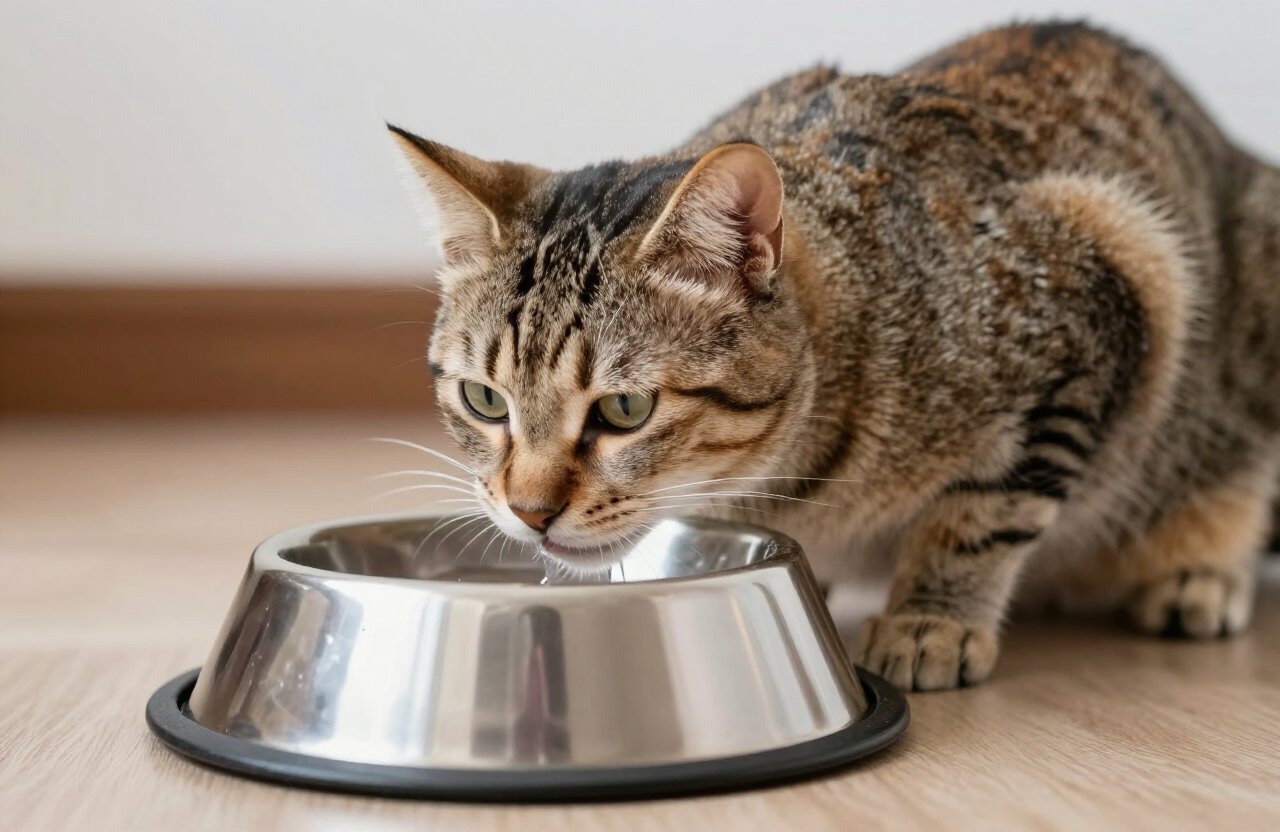
The Water Bowl Situation
Here’s where most of us start, and honestly, where most of us go wrong. That cute ceramic bowl you picked out? Your cat might hate it.
- Location matters more than you’d think.
Cats don’t want to drink right next to where they eat. In the wild, water near a food source could be contaminated, so they instinctively avoid it. Try moving that water bowl to a completely different room. I know it’s less convenient for you, but we’re trying to think like a cat here.
- Cat water bowls come in different materials, and bowl type is weirdly important.
Some cats are particular about their whiskers touching the sides of bowls (yes, really). Wide, shallow dishes often work better than deep, narrow ones. Glass and ceramic bowls are generally preferred over plastic, which can develop a taste or odor over time that puts cats off.
- Clean the water bowl daily.
Cats have a much better sense of smell than we do, and even slightly stale water can turn them off completely. Fresh water in a clean bowl makes a real difference in cat water intake.
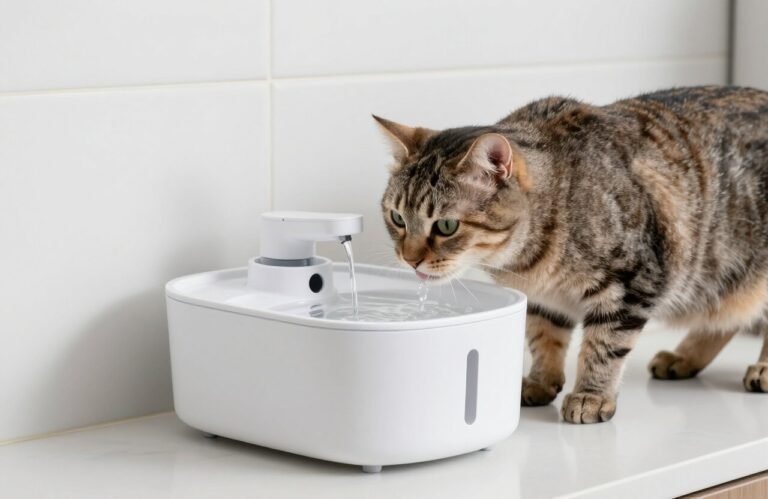
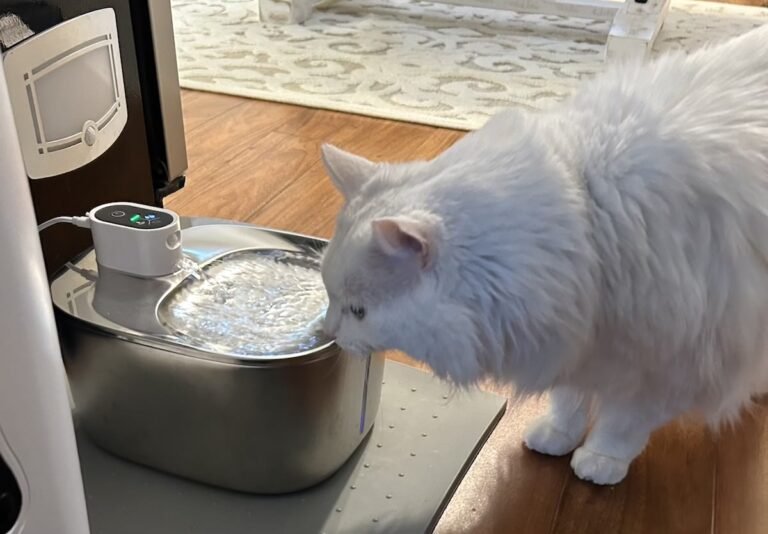
Cat Water Fountains: Worth the Investment?
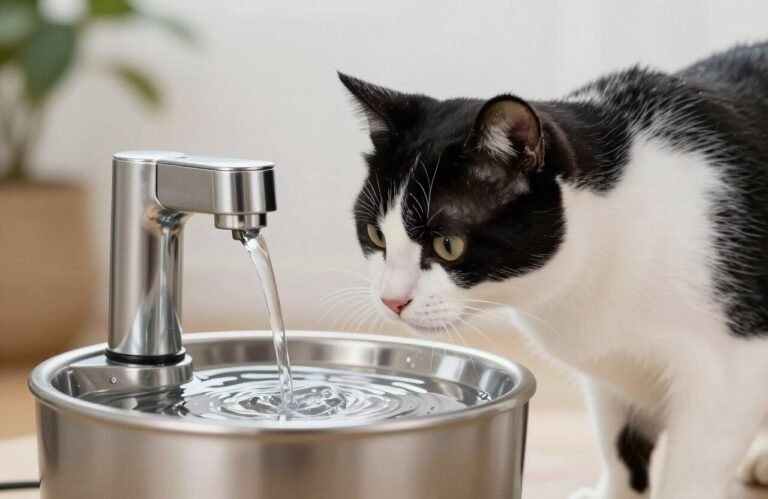
I’ll be honest—cat water fountains seem like an unnecessary gadget at first. But they actually work for a lot of cats. The running water is more appealing (again, that evolutionary instinct toward fresh, moving water sources), and the sound can attract them to drink more.
The pros:
- Many cats genuinely drink more from fountains.
- The constant circulation keeps the water fresher and more oxygenated.
- Some fountains have filters that improve water quality and remove impurities.
The cons:
- They need regular cleaning (we’re talking every few days, not just when it looks gross).
- The pump can be noisy depending on the model.
- They cost more upfront than a regular bowl.
- And if the power goes out or the fountain breaks, your cat needs a backup water source anyway.
If you go this route, start with a mid-range fountain. The super cheap ones often have loud pumps or break quickly, but you don’t need the fanciest model either. Look for one that’s easy to disassemble and clean—trust me on this. A pet water fountain can significantly increase daily water consumption in cats who are attracted to moving water.
Multiple Water Stations Throughout Your Home
This is probably the easiest trick in the book: put water bowls in multiple locations around your house. I’ve got one in the living room, one in the bedroom, and one in the bathroom. It sounds excessive, but cats are creatures of opportunity. The more chances they have to drink, the more likely they’ll actually do it.
This is especially helpful if your FeLV cat isn’t feeling great and doesn’t want to walk far. Having water nearby wherever they’re resting makes it that much easier for them to stay hydrated. Strategic placement of water sources can encourage drinking behavior throughout the day.
The Ice Cube Trick
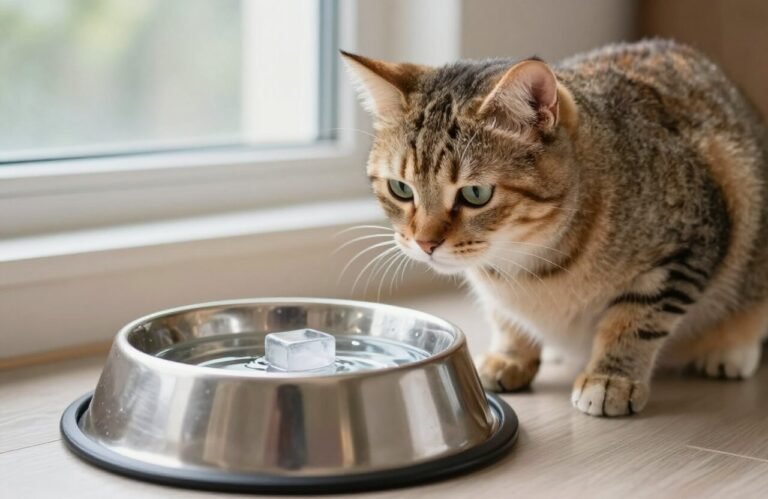
Some cats—not all, but some—are fascinated by ice cubes. Drop a couple into their water bowl and they might investigate, play with them, and end up drinking more water in the process. It’s free, easy to try, and worst case scenario, it just melts into slightly colder water. Cold water can be more palatable for certain cats, especially during warmer months.
Wet Food vs Dry Food for Cat Hydration
Here’s the single most effective way to increase your cat’s water intake: feed more wet food. Dry kibble is only about 10% water, while wet food is typically 75-80% water. That’s a huge difference.
Now, I know wet food is more expensive, and it’s messier, and it doesn’t stay fresh in the bowl all day like kibble does. But for FeLV cats especially, that extra moisture is incredibly valuable. Even if you can’t afford to switch completely, adding one meal of wet food per day makes a noticeable difference.
You can also add a little water to wet food to make it more of a gravy consistency. Some cats love this; some look at you like you’ve personally insulted them. It’s worth trying. This moisture-rich diet approach helps ensure adequate water consumption even if your cat isn’t a big drinker.
What Doesn’t Work (Usually)
Let me save you some time and frustration. Here are things people often try that rarely pan out:
- Forcing your cat to drink. This just stresses them out and makes them associate water with something negative.
- Leaving water in direct sunlight. It gets warm and grows algae faster. Cats aren’t into it.
- Using distilled water thinking it’s “purer.” Regular filtered tap water is fine for most cats, and distilled water actually lacks minerals that can be beneficial.
When to Talk to Your Vet
Look, I’m all about the practical tips, but I also need to be straight with you: if your FeLV cat is really not drinking despite your best efforts, that’s a conversation for your vet. Persistent low water intake can indicate underlying health issues beyond just preference.
Some cats need subcutaneous fluids—basically fluids administered under the skin at home or at the vet’s office. It sounds intimidating, but many cat owners learn to do this at home, and it can be a game-changer for cats who just won’t drink enough on their own. Your veterinarian can show you proper subcutaneous fluid administration technique if needed.
Water Quality and Cat Drinking Habits
The quality of water you offer matters more than you might think. Cats have sensitive taste buds and can detect chemicals like chlorine in tap water. If your cat seems reluctant to drink, try:
- Filtered water: A simple water filter can remove chlorine and other compounds that might put cats off.
- Letting tap water sit: Chlorine evaporates over time, so letting water sit for a few hours before offering it can help.
- Room temperature water: Most cats prefer water that’s not too cold or too warm.
Understanding Cat Drinking Behavior
Cats have unique drinking patterns compared to other pets. They typically drink small amounts frequently throughout the day rather than large quantities at once. This natural behavior means you might not actually see your cat drinking very often, even if they’re getting adequate hydration.
Normal water intake for cats is approximately 60ml per kilogram of body weight daily. However, this varies based on diet (wet vs dry food), activity level, environmental temperature, and overall health status. Cats eating primarily dry food need to drink more water than those on a wet food diet.
The Bottom Line
Getting cats to drink more water takes patience and experimentation. What works for one cat might not work for another, and that’s okay. Try a few different strategies—whether it’s cat water fountains, multiple water bowls, wet food, or a combination—and see what your cat responds to.
For FeLV cats, every little bit of extra hydration helps support kidney function, immune system health, and overall wellbeing. It’s not going to cure the virus, but it supports their overall health and can help them feel better day-to-day. Proper hydration is one of the simplest yet most effective ways to support cats with chronic health conditions.